
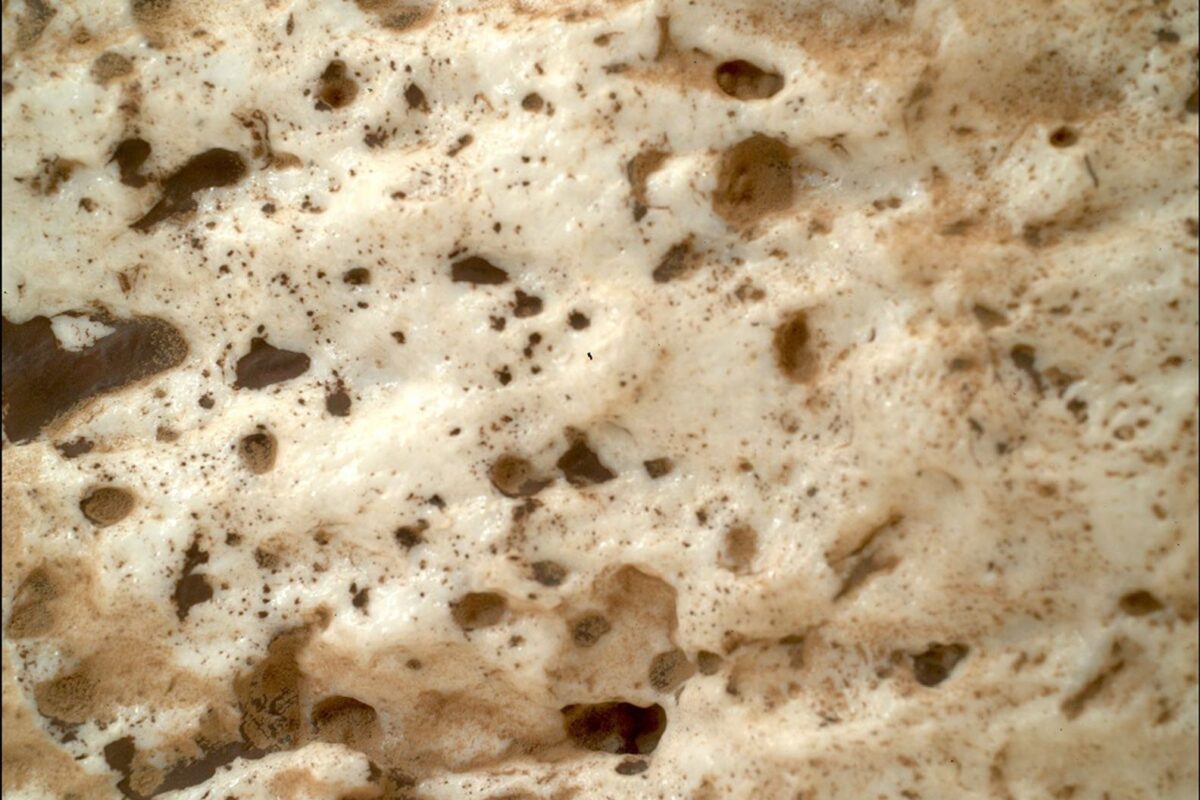
NASA’s Perseverance rover is investigating unusually pale rocks outside Jezero crater after instrument readings identified hydrated silica, according to a mission update published on 16 November.
The rocks lie in the Idubi area of the Lac de Charmes region. Their light appearance prompted closer examination; SuperCam measurements showed that they differ from the surrounding igneous material.
Why the rocks matter
Mission scientist Candice Bedford explains that hydrated silica can develop in several water-related settings. On Earth, such deposits can also preserve microscopic traces of past life, making them useful targets for study.
That potential does not establish that these Martian rocks contain biological material. The team is conducting close-range investigations to better understand their chemistry, origin and preservation conditions.
Earlier silica-rich deposits examined near Jezero’s inner rim were too small for the same detailed instrument work. The larger rocks at Idubi offer a better opportunity for close-up measurements.
Source: NASA’s 16 November mission update by Candice Bedford. Original FrontPage SA report based on that update; checked 17 November 2026.
Photo: NASA/JPL-Caltech, Perseverance SHERLOC WATSON camera, 29 October 2026 (Sol 2023). Real rover photograph, not an illustration. Image source · NASA editorial reuse permission. Display resizing/cropping only; no endorsement implied.