
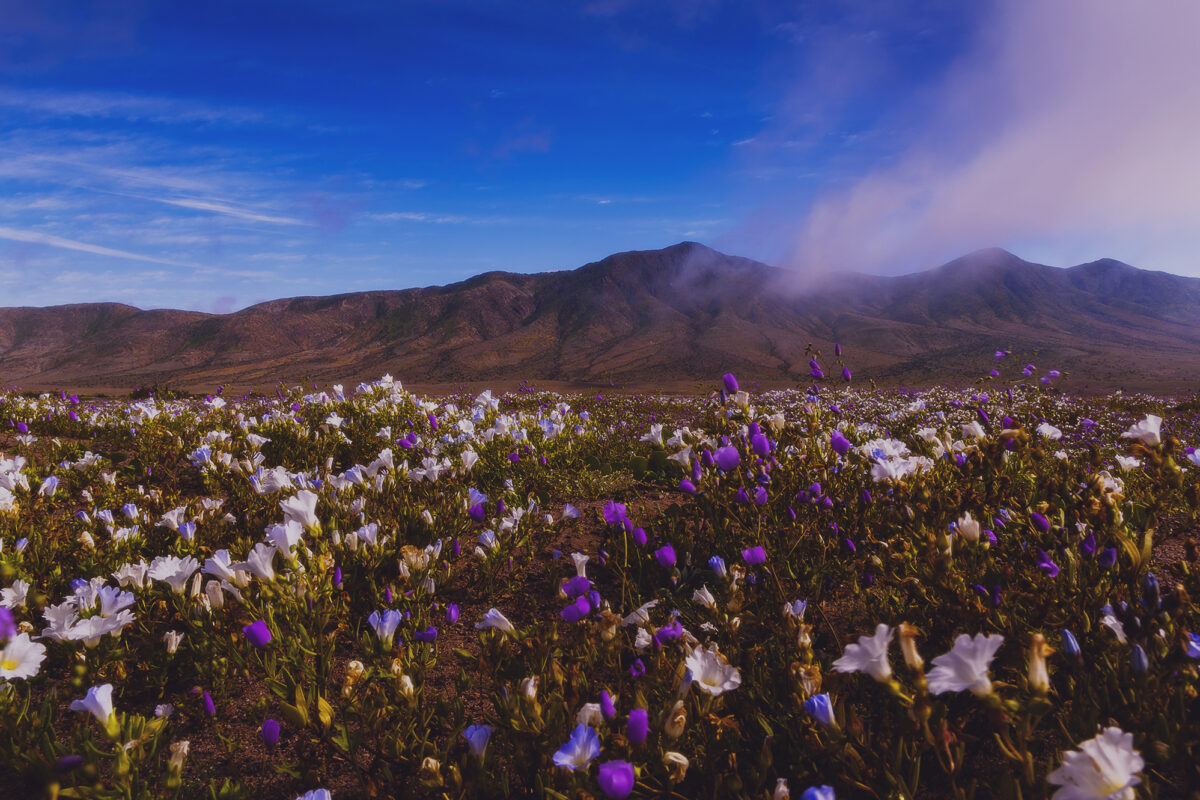
An unusually wet winter has been followed by extensive flowering in Chile’s Atacama Desert, according to a NASA Earth Observatory report published on 19 November.
The agency compares Landsat observations from 14 September and 24 October 2026. Areas south-west of Copiapó changed from largely brown terrain or white-flowered hillsides to prominent red-purple patches as different plants bloomed.
NASA reports that winter rain helped dormant seeds germinate. Researchers also used field photographs, drones and satellite observations to study the flowering landscape and its changing biodiversity.
Scientists quoted in the report describe the 2026 bloom as potentially the most extensive observed during the satellite era. That is an assessment of this event, not a claim that desert flowering happens every year.
Read NASA Earth Observatory’s report and current satellite comparisons. Checked 20 November 2026.
Historical photograph of flowering desert in Chile, 2 September 2017; not the 2026 bloom or NASA satellite imagery. Photo: Chang Hyon Lee / Wikimedia Commons, CC BY-SA 4.0. Automatic display resizing/cropping may apply; photo adaptations retain this licence.





Reader discussion